


Home page " Digital resources " Licensed databases " Middle Eastern and North African Newspapers
Middle Eastern and North African Newspapers
The digital newspaper archive offers an insight into the eventful history of the countries of the Middle East and North Africa
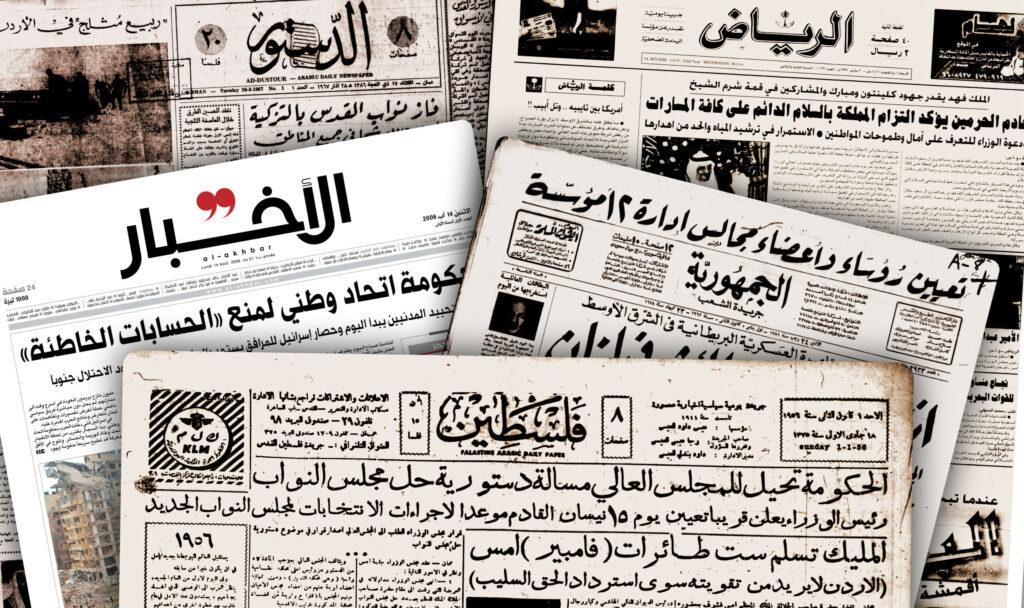
The digital newspaper archive offers an insight into the eventful history of the countries of the Middle East and North Africa.
These 5 licensed newspapers form the premium offer of the largely free collection. There are a further 79 newspapers in the free collection. In this list you will find all 84 newspapers. Individual pages can be downloaded as PDF files and searched in full text.
The programme is available throughout Germany and at German institutes abroad via the system of national licences free of charge. Ask your library for the registration of this licence if access is not yet possible.
Newspapers
The premium offer of the collection includes the following newspapers and volumes:
- Al-Akhbār (الأخبار), Beirut, Lebanon, (2006 - 2019, 3,691 issues)
- Al-Dustūr (الدستور), Amman, Jordan (1967 - 2000, 10,612 issues)
- Al-Jumhūrīyah (الجمهورية)Cairo, Egypt (1962 - 1986, 8,803 issues)
- Al-Riyāḍ (الرياض)Riyadh, Saudi Arabia, (1972 - 1996, 6,885 issues)
- Filasṭīn (فلسطين)Jerusalem, Israel (Palestine) (1956 - 1967, 3,359 issues)
Contents
From the Ottoman Empire to the Arab Spring, the countries of the Middle East and North Africa have experienced a chequered history. The Middle East and North Africa Newspapers collection includes publications from this dynamic region and offers unique insights into the history of the individual countries as well as a comprehensive overview of important historical events from the late 19th century to the present day.
The most important topics include the decline of colonialism, the collapse of the Ottoman Empire, the Suez Crisis, the Cold War, the rise of the oil industry, the pan-Arab movements of the 20th century, both world wars, the founding of the State of Israel, the Iran-Iraq War and the recent Arab Spring.
Character recognition
The full text of the archive was obtained by digital character recognition (OCR). Arabic is a difficult language in this process. The editions from 1980 onwards were available as printed sources and therefore have a higher recognition rate. Earlier editions are based on microfilms and may therefore be less accurate.